What is pregnancy anxiety and 5 ways to find calm before birth
When joy and fear coexist
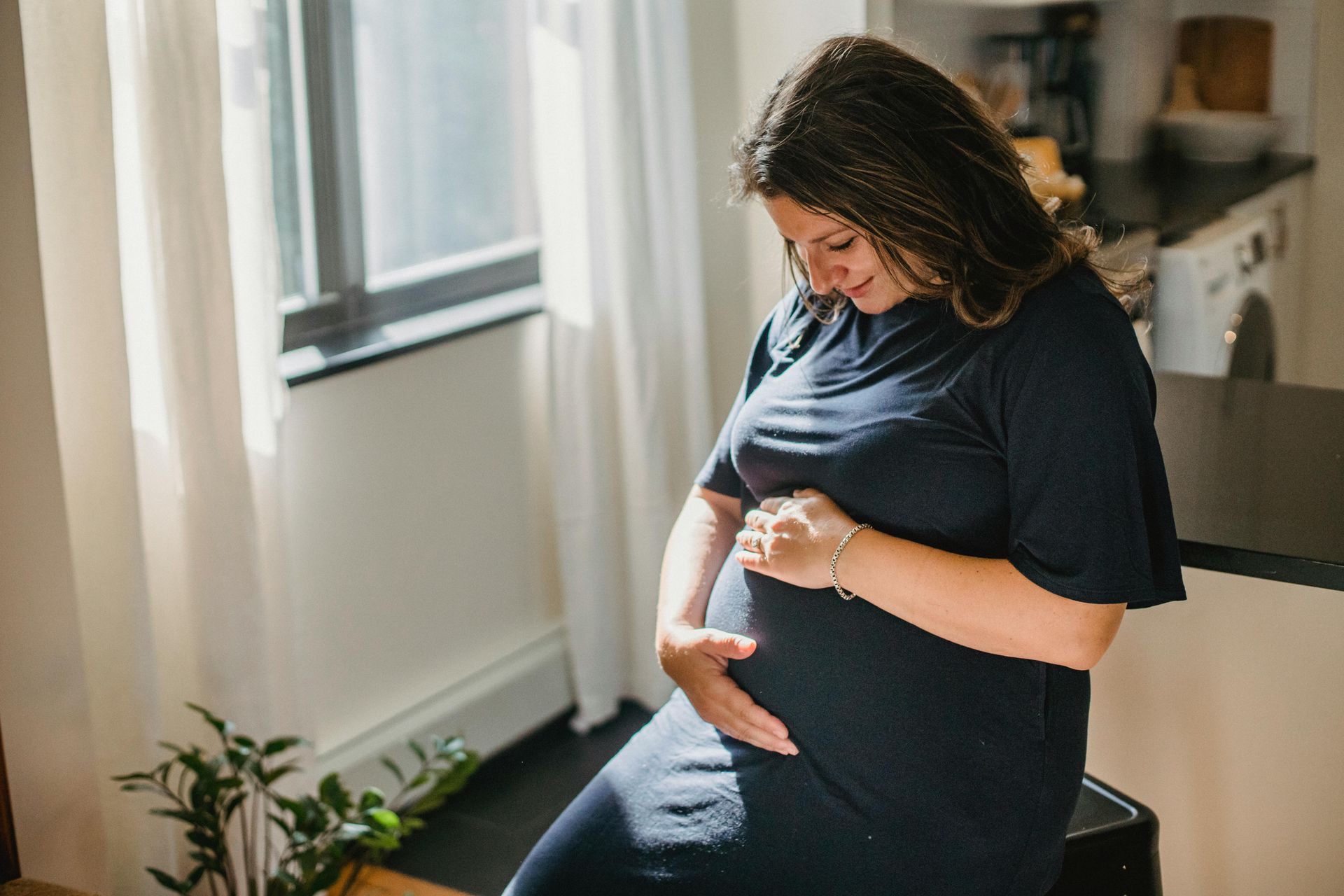
It’s late at night. One hand rests on your belly, feeling every flutter and shift. The other scrolls endlessly through your phone, searching for reassurance that everything is okay. You love this baby deeply, yet your mind keeps whispering what if?
This is what pregnancy anxiety can look like, that constant push and pull between gratitude and worry. You may find yourself awake at 3 a.m., replaying every appointment, every symptom, or every story you’ve read online. You might feel guilty for feeling anxious, telling yourself, I should be happy. But you can love your pregnancy and still feel scared. Both can be true.
Pregnancy has a way of amplifying everything: the love, the excitement, and sometimes, the fear. I’m Stephanie Poole, therapist and founder of Sitting in Sisterhood, a nurturing space offering holistic therapy for moms. Through this work, I support women who feel caught between anticipation and anxiety, helping them find clarity and calm in a season that often feels uncertain.
If you’ve been feeling the weight of constant worry or sleepless thoughts, my perinatal and pregnancy therapy can help you breathe again and feel steady as you prepare for motherhood.
Is pregnancy anxiety a thing?
Yes, it is, and it’s more common than most people realize. Pregnancy anxiety refers to persistent worry, restlessness, or fear during pregnancy. It can appear as racing thoughts, a fast heartbeat, or constant scanning for reassurance.
Many women describe it as a mix of excitement and dread, like their mind is on alert even when everything looks fine. You might check symptoms repeatedly, overthink every decision, or feel unable to relax before an appointment.
According to the Policy Center for Maternal Mental Health, about 20% of women experience maternal anxiety disorders, with the highest rates occurring during early pregnancy (25.5%).
This doesn’t mean you’re ungrateful or weak. It means your body and mind are trying to protect what matters most. Pregnancy is both an emotional and physical transformation. Feeling anxious during it doesn’t make you a bad mother; it makes you human.
Pregnancy anxiety can arise even in healthy, wanted pregnancies. Sometimes it’s triggered by previous losses or fertility struggles; other times, it comes without warning. What matters most is not ignoring it, but understanding it.

Why can anxiety feel stronger during pregnancy?
If you’ve ever asked yourself, can pregnancy make anxiety worse, the answer is yes. There are both biological and emotional reasons why worry feels more intense during this time.
Hormonal shifts can heighten sensitivity, making it harder to regulate emotions. Disrupted sleep, physical discomfort, and changes in daily rhythm can also amplify stress. Emotionally, pregnancy brings uncertainty about birth, your baby’s health, and even who you’ll become as a mother.
Your body is doing the hardest job it’s ever done, and your mind is adapting to something immense. Understandably, you might feel unsettled, even when everything is medically normal.
When it feels like too much
There’s a difference between occasional worry and anxiety that starts to take over. If you find yourself constantly checking for danger, replaying fears, or feeling tension in your body every day, it may be time to reach out for support.
Anxiety during pregnancy can turn into panic, insomnia, or emotional exhaustion if it’s left unattended. You don’t have to wait until it becomes unbearable. Early support can help you regulate your body and quiet your mind before anxiety grows deeper roots.
Perinatal and pregnancy therapy offers that safe space, a place to release fear, process uncertainty, and reconnect with calm.
5 strategies for dealing with pregnancy anxiety
Pregnancy anxiety can’t be solved by simple tips or quick fixes, but there are compassionate ways to soothe your nervous system and help you feel grounded again. These strategies are not about perfection; they’re about presence and self-trust.
1. Slow your breathing and anchor in the present
When anxiety peaks, your breath often becomes shallow and fast. Slowing it down is one of the most effective ways to regulate your nervous system. Try placing a hand on your belly, inhale slowly through your nose for four counts, hold for two, and exhale gently through your mouth for six.
Feel your body soften with each breath. Each time you connect with the rhythm of your breathing, you remind your body that it’s safe. You don’t have to control everything; you only need to be here, now.
2. Let yourself feel without judgment
Pregnancy anxiety often hides behind guilt, the belief that “I shouldn’t feel this way.” But emotions don’t disappear because we ignore them. They soften when we allow them to be felt.
Give yourself permission to cry, to journal, or to simply admit that you’re scared. Emotional release is not weakness; it’s a form of regulation. The more honest you are with yourself, the easier it becomes to find relief.
3. Protect your peace from overwhelm
One of the most practical ways to deal with anxiety while pregnant is to protect your energy from overstimulation. Limit exposure to distressing news, social media, or conversations that fuel fear.
If scrolling through birth stories or health forums makes your chest tighten, take a step back. Replace that time with something grounding, a walk, music, or a brief moment outdoors. You are allowed to curate your peace.
4. Create calm through daily rituals
You don’t need elaborate routines to feel balanced. What matters is consistency. Build simple moments of calm into your day, a quiet morning stretch, writing three things you’re grateful for, or a short evening walk.
Small rituals remind your body that it can relax. They help train your mind to find stability in repetition, offering a sense of safety and control during a season of change.
5. Reach for holistic and professional support
If your anxiety feels constant, heavy, or unmanageable, therapy can make a profound difference. You don’t need to face pregnancy anxiety alone.
At Sitting in Sisterhood, perinatal and pregnancy therapy combines evidence-based counseling with holistic tools like mindfulness, somatic grounding, and nervous system regulation. It’s a space where you can bring your fears without judgment and learn how to navigate them with compassion and clarity.

What to do when anxiety overshadows joy
There may be days when the excitement fades under the weight of worry. That doesn’t mean you’re doing pregnancy wrong; it means you’re experiencing it as a full human being.
If you notice your anxiety is affecting your sleep, appetite, or ability to enjoy daily life, it’s a sign to reach for support. Therapy helps you understand what your mind and body are trying to communicate instead of fighting them.
Asking for help isn’t a sign of weakness. It’s an act of responsibility, of love for yourself and for the baby you’re bringing into the world. Healing doesn’t mean being fearless; it means finding calm even when fear shows up.
You deserve to feel calm while creating life
Carrying life is one of the most extraordinary things your body will ever do, and it’s okay if it also feels overwhelming. You are already doing something brave by acknowledging your anxiety instead of hiding it.
Pregnancy anxiety is treatable, and peace is possible. The fear you feel now does not define the mother you’ll be. With the right care, your body and mind can remember what calm feels like.
You don’t have to face this alone. Perinatal and pregnancy therapy offers a compassionate space to release fear, rest your mind, and reconnect with the quiet joy of becoming a mother.
Healing isn’t about erasing worry; it’s about learning to breathe through it, one moment, one heartbeat, one deep breath at a time.

Hello! I’m Stephanie Poole
Licensed clinical social worker and board-certified health and wellness coach.
I support overwhelmed moms in reconnecting to their inner strengths and healing emotional struggles that arise in the postpartum period.